
Used industrial tools encompass a wide range of equipment that has seen prior service in manufacturing, construction, laboratory, or maintenance environments. Guidelines for safe inspection and maintenance describe methods to evaluate condition, detect wear or damage, verify functional performance, and plan upkeep actions. These guidelines typically address visual inspections, operational tests, component-level checks, documentation practices, and safety considerations specific to previously owned or reconditioned items. The concept centers on reducing unexpected failures, preserving operator safety, and maintaining functional reliability while acknowledging that used tools may present variable histories and condition levels.
Guidelines for these tools often emphasize systematic, repeatable approaches rather than ad hoc checks. That includes defined inspection intervals, standardized checklists, criteria for acceptance or repair, and recordkeeping that captures prior findings and remedial steps. The scope of guidance may span handheld tools, power-driven machinery, lifting devices, and precision instruments, and it can integrate both simple visual checks and more advanced non-destructive testing where needed. Language in guidelines commonly frames findings as conditions that may require action rather than definitive judgments about usability.
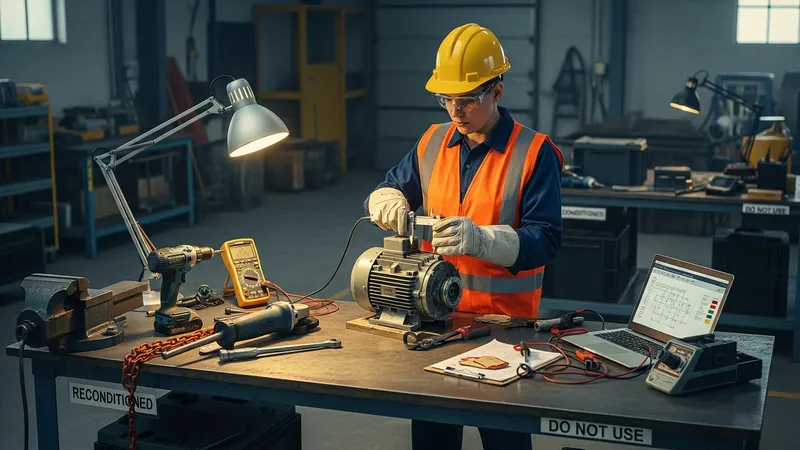
Inspection protocols typically begin with a visual sweep to identify corrosion, deformation, missing parts, or contamination. Visual findings may prompt more detailed functional tests such as operating a device under no-load and load conditions, checking electrical insulation resistance, or verifying mechanical travel and clearances. For many used items, an initial comprehensive assessment may be followed by a risk-based inspection schedule where frequency depends on criticality and prior condition. Documentation of findings and photographic records often support later maintenance decisions and traceability.
Maintenance approaches may vary from simple cleaning, lubrication, and fastener torque checks to component replacement and refurbishment. Preventive maintenance schedules often reference manufacturer recommendations where available, but for used tools those recommendations may need adaptation based on observed wear and usage history. Condition-based maintenance, where actions are triggered by measured parameters (e.g., vibration, temperature, or calibration drift), can be an alternative when baseline performance data are obtainable. Parts availability and compatibility should be considered when planning repairs for older or discontinued models.
Performance evaluation for used instruments and machines commonly uses functional tests and measurable tolerances to determine acceptability. For precision instruments, calibration against a known standard may establish whether an item meets operational criteria. For mechanical equipment, load-testing, cycle testing, or runtime monitoring can indicate remaining useful life trends. When manufacturers’ specifications are not available, comparative tests against similar functioning units or industry-accepted tolerances often serve as pragmatic references. Any performance assessment should state uncertainty and test conditions clearly.
Recordkeeping and long-term upkeep planning typically include service logs, inspection checklists, repair histories, and parts replacement schedules. These records may be maintained digitally or on paper and often form the basis for decisions about continued use, refurbishment, or retirement. Traceability can reduce redundant inspections and help identify recurring failure modes. Over time, aggregated records can inform lifecycle planning by highlighting components that often require replacement and by indicating when repair costs may exceed the value of continued service.
In summary, guidelines for safe inspection and maintenance of used industrial tools frame a structured approach to evaluating condition, ensuring functionality, and planning upkeep without prescriptive mandates. They often combine visual checks, functional testing, maintenance scheduling, performance verification, and documentation practices tailored to the type and criticality of the equipment. The next sections examine practical components and considerations in more detail.
Visual inspection commonly serves as the first line of assessment for used industrial tools. Inspectors often look for surface corrosion, cracks, deformation, loose fasteners, wear patterns, missing guards, and signs of overheating or contamination. Lighting and cleanliness can affect detectability, so inspections typically occur in well-lit, prepared areas. Functional checks may follow visual work: running a motor briefly, actuating mechanical linkages, confirming switches engage, or testing a tool under minimal load. Findings are usually recorded on standardized forms that list common failure indicators and severity levels to support consistent interpretation over time.
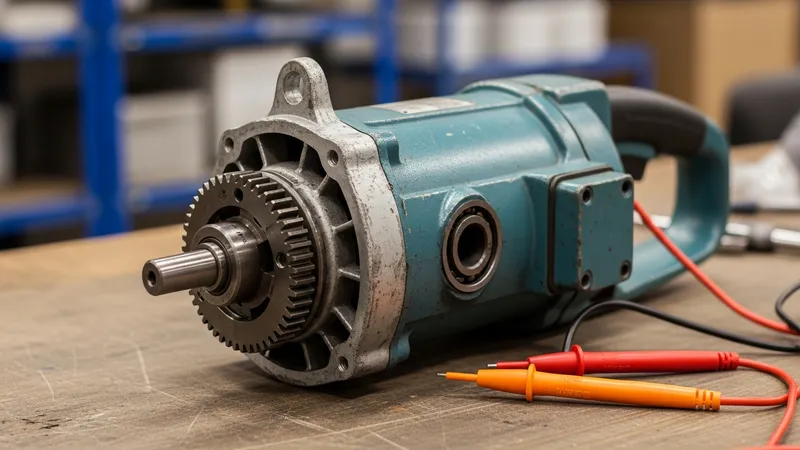
For many items, inspectors may use simple measuring tools such as calipers, micrometers, or torque wrenches to quantify wear against reference dimensions. In cases where electrical integrity is relevant, basic tests like continuity, insulation resistance, or earth-ground verification may be employed. Where available, comparison to manufacturer tolerances or calibration certificates provides a clearer acceptance benchmark; otherwise, condition may be judged relative to similar serviceable units. Inspections often include checks for appropriate safety labels and readable operating instructions.
Non-destructive testing methods sometimes supplement visual and functional assessments when hidden flaws are a concern. Techniques such as dye penetrant, magnetic particle, ultrasonic testing, or borescope inspection may be appropriate for critical load-bearing components or pressure vessels. These methods typically require trained personnel and may reveal subsurface cracks, thinning, or internal defects that visual inspection cannot detect. The decision to apply NDT often depends on risk assessment, component criticality, and cost considerations.
Insider considerations for inspections include establishing baseline condition records, training inspectors on common wear modes for specific tool types, and rotating inspection responsibilities to reduce oversight bias. Teams may also schedule initial comprehensive inspections after acquisition of used equipment to establish baseline metrics for future condition-based maintenance. Documentation that notes environmental exposures—such as corrosive atmospheres or dust—can contextualize observed degradation and guide subsequent monitoring intervals.
Preventive maintenance for used tools typically involves routine cleaning, lubrication, adjustment, and replacement of consumables like seals, belts, or brushes. Schedules may be adapted from original manufacturer guidance where available, but for used items they commonly shift to more conservative intervals if usage history is uncertain. Condition-based practices use measured indicators—such as vibration trends, temperature rise, or dimensional wear—to trigger maintenance actions when thresholds are approached. Combining preventive and condition-based approaches often balances resource use and risk by allowing more frequent checks for critical items and less frequent servicing for lower-risk equipment.

Lubrication and corrosion control are frequent maintenance elements, particularly for mechanical tools stored in variable environments. Appropriate lubricant types and reapplication intervals may influence component life and operational consistency. Replacement parts selection for older tools may require cross-referencing part numbers or consulting service manuals; when original parts are unavailable, functionally equivalent alternatives can be evaluated for fit and compatibility. Maintenance records that capture part numbers, service dates, and technician notes aid future troubleshooting and lifecycle estimation.
Electrical maintenance for power tools and instrumentation often involves checking insulation, verifying grounding integrity, and examining connectors for wear or overheating. For battery-powered equipment, battery capacity testing and safe charging practices can affect longevity and safe operation. Calibration maintenance for measuring instruments typically follows a schedule influenced by usage frequency and required accuracy; calibration certificates or traceable standards provide evidence that an instrument meets expected measurement uncertainty limits.
Practical considerations include staging a spare parts inventory for commonly replaced components, training maintenance staff on older tool models, and documenting nonstandard modifications that may affect safety or performance. Maintenance tasks for used equipment may reveal undocumented prior repairs; recording those findings helps future technicians anticipate weak points. Where possible, maintenance planning often benefits from a risk-prioritization matrix that allocates more frequent or detailed attention to items whose failure could cause significant operational disruption or safety concerns.
Evaluating condition commonly pairs objective measurements with qualitative observations. Objective tests might include load or cycle testing for mechanical devices, accuracy checks against calibrated standards for measurement tools, or runtime monitoring for motors and compressors. Qualitative observations include operator feedback on unusual noises, vibration, or performance variability. When executing performance tests, documenting test conditions—such as ambient temperature, applied load, and duration—helps interpret results consistently and compare performance over time.
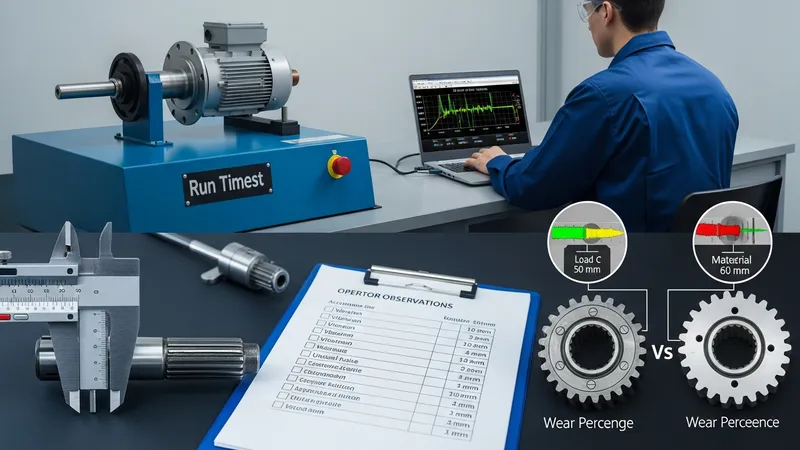
Acceptance criteria for used equipment are often framed as ranges rather than pass/fail absolutes, acknowledging measurement uncertainty and operational context. For precision tools, acceptable deviation from a nominal value may be specified in tolerances. For mechanical items, wear limits can be defined in millimeters or as a percentage of original cross-section. Where historical specifications are unknown, comparison testing against a functioning reference unit or consensus industry tolerances can provide practical benchmarks for determining serviceability.
Load testing and endurance runs may reveal performance degradation that static inspections miss. For lifting equipment, proof load tests or brake function checks may be conducted within controlled conditions to verify safe operational capacity. For rotating machinery, vibration analysis and thermography can detect imbalance, misalignment, or bearing degradation before catastrophic failure. These methods typically require calibrated instruments and personnel skilled in interpreting diagnostic outputs, and findings should be correlated to maintenance history.
Considerations for performance evaluation include establishing repeatable test procedures, retaining raw test data for trend analysis, and incorporating operator reports into the assessment mix. Where risk tolerance is low, conservative acceptance thresholds may be applied. Conversely, for noncritical tools in benign environments, looser criteria that emphasize functional adequacy may be appropriate. Clear documentation of evaluation rationale supports transparent decisions about repair, continued use, or retirement.
Operational safety for used tools addresses both human and equipment factors. Safety components such as guards, interlocks, emergency stops, and labels should be verified present and functioning. Personal protective equipment suitability and user training are part of a broader safety program; users may require familiarization with older designs that differ from contemporary ergonomics or control layouts. Work area controls—such as sufficient lighting, ventilation where fumes are present, and safe storage to prevent falling or tipping—also form part of the tool’s operational safety context.
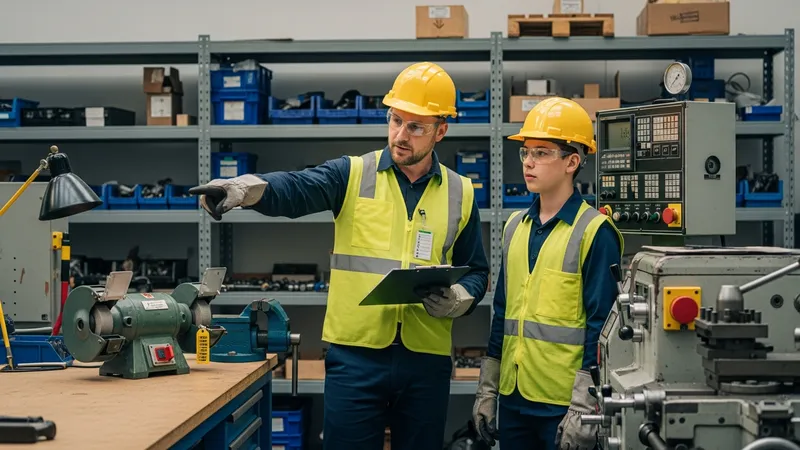
Storage and handling practices influence long-term condition. Dry, temperature-controlled storage can reduce corrosion and material degradation, while proper support and padding may prevent distortion of precision instruments. For tools with batteries or lubricants, manufacturers’ guidance or material safety data sheets typically indicate suitable storage conditions and shelf-life considerations. Regular turnover and inspection of stored items can prevent unexpected deterioration when items are returned to service after prolonged idle periods.
Lifecycle planning often weighs repair costs, expected remaining life, and the availability of replacement parts. Over time, aggregate repair expenses and downtime may make continued use impractical; conversely, refurbishment or component renewal may extend useful service. Long-term upkeep strategies may include scheduled overhauls at defined cumulative operating hours, maintaining a parts catalog, and consolidating knowledge about recurring failure modes so that preventative engineering solutions can be considered when feasible.
Operational considerations as guidance rather than mandates include documenting known limitations of older tools, ensuring that any field modifications are recorded and assessed for safety impact, and periodically reviewing inspection and maintenance intervals in light of actual wear rates. These practices may help organizations manage risk and maintain functional performance while acknowledging the variability inherent in used industrial equipment histories.